


Your First Degree.
Without Detours.
Many working professionals start a bachelor program without knowing if they qualify, what can be credited, or which format fits their job.

Programs from the Partner Network
Bachelor programs from partner universities and education providers worldwide, matched to your goals.
The entry point that changes everything
The bachelor is the first academic degree for many working professionals. And often the most decisive one.
Admission Without Traditional Qualifications
Work experience and qualifications can open university access. I check your chances upfront, before you apply. I have summarized what universities actually require in a compact overview.
Credit Prior Learning
Work experience, certificates, and continuing education can save semesters. That saves time and thousands in tuition fees. More on how job years convert into ECTS credits.
Salary Increase After Graduation
University graduates earn significantly more on average. The bachelor creates the formal requirement for better-paid positions.
Foundation for Master and Beyond
No bachelor, no master. No master, no doctorate. The bachelor is the first building block for everything that follows.
Format That Fits Your Job
Distance learning, online, or blended learning. I find the format that is compatible with your work schedule.
The Right Program, Not Just Any Program
The wrong degree costs semesters and motivation. I compare programs from 20+ partner universities and recommend what truly fits.
Real paths to a part-time bachelor
Two examples from my consultations. How clients completed their bachelor alongside work.
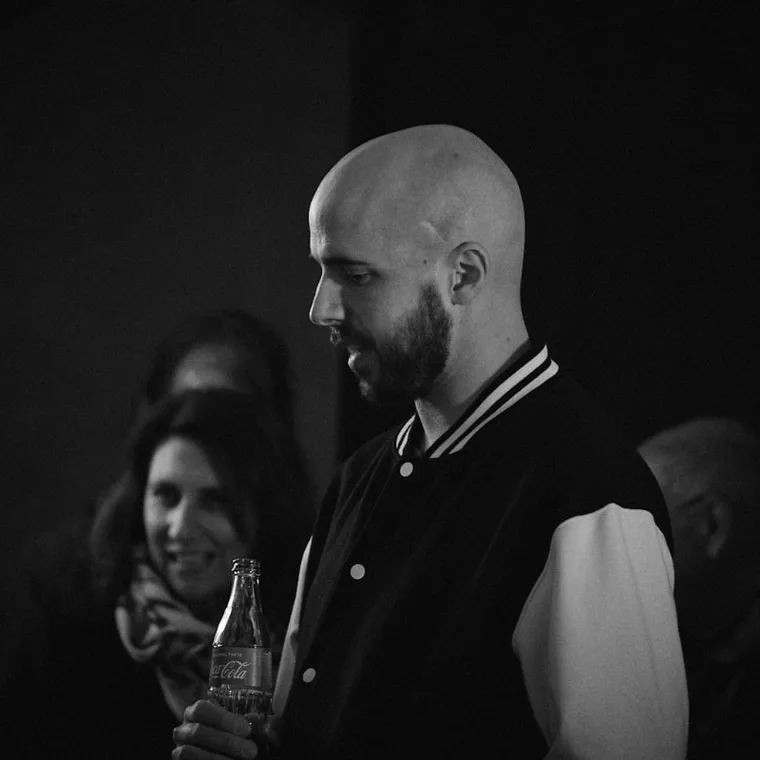
Found a learning method and passed the bachelor thesis with grade A
Always dare to take the first step and don't wait for a certain day or for an event. If a topic fascinates you as much as…
Read storyYour bachelor story
As soon as the next case studies are ready and approved, they appear here. I approach individual clients personally, so this grows step by step.
How to find the right bachelor programme
Six criteria I work through systematically in the initial consultation. Done properly, you end up with three to five truly fitting programmes instead of an advertising shortlist.
Accreditation and recognition in your target country
A state-recognised or accredited private university is mandatory. System or programme accreditation runs via the Akkreditierungsrat in Germany, AQ Austria in Austria, AAQ in Switzerland. Without that stamp the degree is worth little to employers and authorities later. What sits behind those seals, and how to spot a genuine accreditation, is explained in detail on Fernstudium Klartext. I check this first for every programme, before we even discuss content or format.
Programme structure and specialisation depth
A high mandatory share is predictable but inflexible. A large elective area allows specialisation toward your current job or your career change goal. Both are legitimate, depending on whether you want depth or breadth. I show you the module plans of the shortlist side by side so you see what is actually inside.
Tuition fees plus hidden costs
The official fee is only part of the truth. On top come exam fees, extension semesters, mandatory weekend sessions with travel and hotel, abroad modules, graduation fees. For a part-time bachelor we typically talk 10,000 to 25,000 euros total. I run this calculation with you upfront, so you are not surprised in two years.
Format and fit with your job
Pure online study is maximally flexible but demands self-discipline. Blended learning with weekend sessions helps you stick to it, but costs travel time and vacation days. On-site with evening lectures only works near the campus. No format is objectively better. What matters is what your actual work week looks like.
Credit transfer: lenient or restrictive
Massively underrated lever. Some universities credit work experience and prior qualifications generously, others almost not at all. 30 ECTS credited equals one semester saved, easily several thousand euros in fees plus six months of life. From 120+ consultations I know which universities are lenient and which are restrictive.
Service and reachability during your studies
Tutor response time, exam dates per year, sickness and break rules, retake options. Sounds like detail, but it decides whether you finish in regular time or drop out frustrated after three semesters. This is exactly where the universities worth their fees show their colours.
In the free initial consultation, I walk through these six criteria for your situation. At the end, three to five options drop out from the pool of over 60 programmes, ones that truly fit. The rest you can ignore, which saves weeks of own research and protects you from costly missteps.
Recognition in DACH and internationally
Where your bachelor is formally recognised and which authorities are decisive. An overview of the three DACH countries and the international situation.
Germany: ZAB and anabin
A bachelor from a state-recognised or accredited university with 180 ECTS in the Bologna system is automatically recognised. For foreign degrees, the anabin database of the Central Office for Foreign Education (ZAB) is the official reference point: the university and degree must be listed as „H+". University of applied sciences and full university are formally equivalent, the only difference is research focus.
Austria: BMBWF and NARIC Austria
Through the Bologna agreement, bachelor degrees from Germany and Switzerland are typically recognised directly, without an individual procedure. The Federal Ministry of Education, Science and Research (BMBWF) is the responsible authority. For evaluations of foreign degrees, for example for a master application in Vienna, the route runs via NARIC Austria. The evaluation typically takes a few weeks and is significantly less formal than the Swiss procedure.
Switzerland: SBFI
For non-regulated professions (business, IT, marketing, communication), a Bologna bachelor is enough without a separate procedure, the employer assesses plausibility internally. For regulated professions (nursing, teaching, some health professions), a formal recognition via the State Secretariat for Education, Research and Innovation (SBFI) is required. The procedure costs CHF 350 and can take up to ten months. File the SBFI application early, ideally already in the final study semester.
The information on this page is general in nature and based on my advisory practice (last updated 10.05.2026). It does not replace an official credit transfer or recognition decision by the respective university and is not legal advice. Specific decisions are made by universities, the ZAB (Germany), the BMBWF (Austria), or the SBFI (Switzerland). I clarify binding next steps with you in the initial consultation.
Cooperation for Educational Institutions
Jointly connecting students and shaping educational pathways.
For Institutions
Are you a university or educational institution looking for student referrals or strategic partnerships? I look forward to your inquiry.
Request a partnershipHelpful Articles About the Bachelor
In-depth answers to the most common questions about part-time bachelor programs.
Part-Time Bachelor: How Long Does It Take?
6 to 8 semesters is standard. With credit transfers, it is often faster.
Read ArticleDistance Learning in Germany: Providers Compared
State or private: the key German distance universities at a glance.
Read ArticleStudying Without Traditional Qualifications
Work experience, master craftsman, or aptitude test as university access.
Read ArticleCredit Check: Study Shorter and Cheaper
Check in 2 minutes if your prior learning can shorten your degree.
Read ArticleStudy While Working: Combining Job & Degree
Which formats exist and how employers react to them.
Read ArticleDistance Learning Requirements: What You Really Need
Which entry routes exist and what universities actually require.
Read ArticleCredit Transfer for Work Experience: Save Semesters
How job years, certificates, and training can replace ECTS credits.
Read ArticleStudying at 30, 40, or 50: Age Is Not a Barrier
Why later study starts often succeed more than early ones.
Read ArticleBachelor, Master, MBA, Dr.: Degrees Explained
Which degree fits which goal and what separates the levels.
ReadPart-time bachelor, 12 questions from practice
What clients ask most in the initial consultation, answered concisely.
How long does a part-time bachelor really take?
Six to eight semesters is the rule. Those who get prior learning credited (work experience, IHK advancement, certificates, previous studies) can shorten this to four to five semesters. The advertising claim 'bachelor in 36 months' only applies if you really invest 20+ hours per week and don't switch programs.
Can I do a bachelor without a high school diploma?
Yes, in all three DACH countries. In Germany there are three paths: master craftsman or comparable advancement qualification, professionally qualified with relevant work experience, or aptitude test. In Austria the standard route is called Studienberechtigungsprüfung. In Switzerland, professionals use the Passerelle or part-time FH access programs. Which path fits you, I clarify in the initial consultation.
How many ECTS can I get credited from work experience?
Up to 50 percent of a degree program is possible, so up to 90 ECTS in a 180-ECTS bachelor. Some universities flat-rate 30 to 60 ECTS for several years of relevant work experience. Individual recognition via qualification proof can go beyond. The Lisbon Convention obligates universities to credit if no substantial differences exist. The burden of proof lies with the university, not with you.
What does a part-time bachelor cost in DACH?
In Germany between 8,000 and 25,000 euros total for the entire degree, depending on private or state university. In Austria 4,000 to 18,000 euros. In Switzerland 6,000 to 20,000 CHF. State FH are cheaper, private offer more service and flexibility. Most of it is tax-deductible.
Bachelor at FH or university, does it make a difference for the job?
Both degrees are equivalent at 180 ECTS under Bologna. In the private sector, after five years on the job no one asks about FH or university anymore, what matters is experience and results. In public service and strongly regulated professions, the university variant can have advantages because it leads more easily to a doctorate.
How many hours per week do I need alongside the job?
Realistically 15 to 25 hours per week, more during exam phases. The university framework calculates 30 ECTS per semester at 25 to 30 hours of effort per ECTS. In my consulting I say it openly: those who can't find 15 hours fail or extend. That needs honest checking in advance.
Can I use a German bachelor in Switzerland and Austria?
In Austria yes, automatically via the Bologna agreement. In Switzerland the degree is evaluated by SBFI (CHF 350, takes up to ten months). For regulated professions like nursing or teaching, additional professional recognition is needed. For non-regulated professions (business, marketing, IT), the Bologna degree usually suffices without evaluation.
What happens if I temporarily can't continue my studies?
Part-time programs allow leave semesters and extensions. For illness, parental leave, or peak job phases you can pause. Important: tuition fees continue at some private universities, clarify this before enrolling. State programs are more lenient here.
Do I need particularly good math skills for a computer science bachelor?
For classical computer science yes, linear algebra, statistics, and discrete math are mandatory. For applied variants like business informatics or media informatics, solid school math is enough. Those with math gaps should take a preparatory course before starting, most universities offer this for free.
If I want to become a psychotherapist, is a bachelor in business psychology enough?
No. For licensure as a psychotherapist you need a consecutive degree of bachelor and master in psychology under the reformed Psychotherapy Act. Business psychology qualifies you for HR, coaching, market research, but not for clinical treatment. Those who want to become a psychotherapist need the classical psychology track.
Is the bachelor financially worth it?
On average, academics in DACH earn 30 to 50 percent more than non-academics, and the gap grows with career length. With 12,000 euros in study costs and 6,000 euros additional salary per year, the investment is amortized after three years. More important than the number is professional fit: a business bachelor in a position without advancement potential doesn't pay off, alongside a shift leader role or as a career changer to specialist it does.
How do I find out which university really fits me?
Six criteria I work through in the initial consultation: accreditation and recognition in your target country, program structure (mandatory and elective), tuition fees plus hidden costs, format (online, blended, on-site phases), credit transfer practice (lenient or restrictive), and service (study advice during the program). After the conversation you have three to five programs to choose from that really fit.
Bachelor Programmes Compared
Seven universities with typical example programmes, regular study duration, list price and format. An orientation, not a ranking.
The table gives a quick overview. What it cannot show: credit transfer headroom (can save several thousand euros and one or two semesters), running promotions, early-bird or employee discounts, and individual fit per life situation. Tuition fees are list prices as of 2026, rounded into typical bands. For any concrete case, I run real total costs in the initial consultation, including realistic credit transfer.
| University | Programme (example) | Duration | Price level | Format |
|---|---|---|---|---|
| Wilhelm Büchner University | B.Eng. Industrial Engineering | 7 semesters | Distance, optional on-site | |
| Euro-FH Hamburg | B.Sc. Business Psychology | 7 semesters | Distance, optional on-site | |
| Biberach University | B.A. Construction Business (part-time) | 7 semesters | Blended learning | |
| DHAW Potsdam | B.Sc. Business Administration | 6 semesters | 100 % online, flexible start | |
| IU International University | B.A. Business Administration | 6 to 8 semesters | Distance, flexible start | |
| Hochschule Fresenius | B.A. Business Psychology | 7 semesters | Online, blended or on-site | |
| FOM University | B.A. Business Administration | 7 semesters | Evening and Saturday on-site |
Partner universities from my network are highlighted in blue. The euro symbols show the relative price level (1 affordable, 5 premium) and factor in services and added value such as supervision, credit-transfer practice, and overall support. List prices 2026, rounded, excluding exam or extension fees. Partners from the Studienflüsterer network can be individualised well via credit transfer, which lowers total cost and study duration noticeably. Which programme actually fits depends on your daily life, not on a row in the table.
In 30 minutes, find out if and how the bachelor works for you
Admission realistic? What can be credited? Which program fits your job? I clarify this with you in the initial consultation.